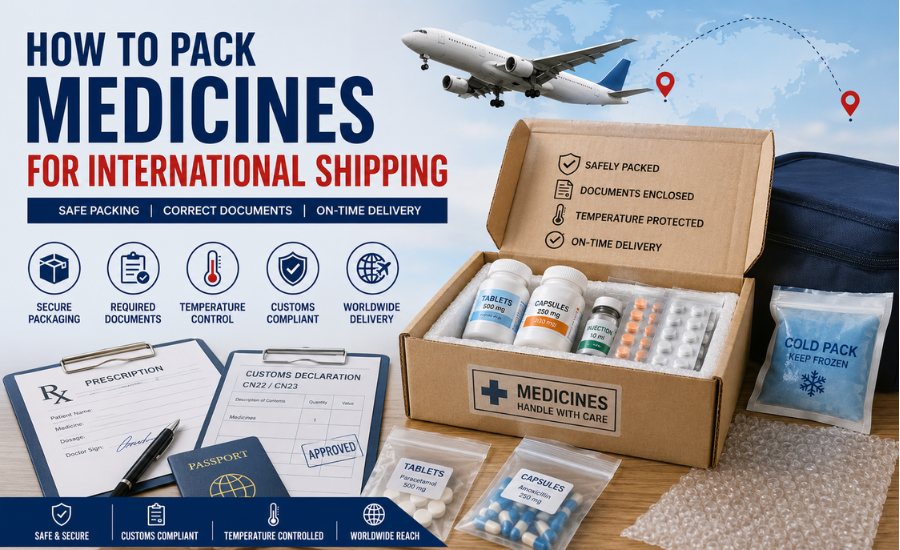
Packing medicines for international shipping comes down to four things: a rigid outer box, sealed inner pouches, temperature control if needed, and complete customs paperwork. Miss one and the parcel can get held up, damaged, or sent back.
Medicine parcels get checked more closely than a regular package. A loose label or a missing prescription is often enough to trigger a hold at customs, which is why how to pack medicines for international shipping properly matters.
What Is the Best Way to Pack Medicines for International Shipping?
Use a sturdy outer box, seal each strip or bottle in its own plastic pouch, and label the parcel clearly. This covers most of what medicines for international shipping need to survive the trip.
A few things worth doing every time:
- Keep medicines in original packaging, manufacturer's label included.
- Seal strips or bottles inside a plastic pouch so moisture stays out.
- Pick a corrugated box over a padded envelope. Envelopes crush.
- Line the inside with bubble wrap so nothing shifts in transit.
- Write "Medicines" on the box with basic handling notes.
None of this takes long, but it's usually the difference between a parcel that clears customs and one pulled aside.
Which Documents Are Required for Medicines for International Shipping?
Customs officers typically want a prescription, an invoice, and a declaration form. Skip one, and medicines for international shipping rarely clear the border on the first attempt.
Keep these ready:
- A doctor's prescription with the patient's name on it
- An invoice showing the value of the medicines
- An import permit, if the destination country asks for one
- A cold chain certificate for anything needing refrigeration
Most delays come down to one missing paper. Getting the documents right is half of how to pack medicines for international shipping correctly.
How Should Temperature-Sensitive Medicines Be Packed?
Pack them in an insulated box with gel packs or dry ice, and seal it tightly enough that the temperature holds until delivery.
A few extra steps matter here:
- Use a foam or thermal insulated box, not a regular carton.
- Place gel packs on every side, not just the top.
- Add a temperature indicator strip so the receiver can check it.
- Close every gap so warm air can't get in.
- Pick the fastest shipping option available.
Vaccines, insulin, and most biologics fall into this group. A short delay is enough to spoil a batch.
What Packaging Materials Work Best for Medicines for International Shipping?
Rigid boxes, sealed pouches, bubble wrap, and moisture absorbers each do a different job, and mixing them keeps medicines for international shipping safe from breakage or spoilage.
|
Material |
Purpose |
Best For |
|
Corrugated box |
Outer protection |
All medicine types |
|
Bubble wrap |
Shock absorption |
Glass bottles, vials |
|
Sealed plastic pouch |
Moisture barrier |
Tablets, capsules |
|
Insulated foam box |
Temperature control |
Vaccines, insulin |
|
Gel ice packs |
Cold chain support |
Biologics |
|
Silica gel packets |
Moisture control |
Powders, capsules |
Relying on just one usually isn't enough. A shipment that travels for several days needs more than one layer of protection.
Which Countries Have Strict Rules on Medicines for International Shipping?
The United States, Canada, Australia, and the UAE all enforce tight import rules, and what's acceptable can differ between countries.
Worth checking before you ship:
- Some countries ban specific drug categories outright.
- Prescription drugs often need a separate import permit.
- Quantity limits apply even for personal use.
- Controlled substances usually need extra approval.
Rules change more often than expected, so check the destination country's health authority website close to your ship date.
What Mistakes Should You Avoid When Shipping Medicines Internationally?
The most common mistakes are weak packaging, missing paperwork, and peeling off the original label. Any one is enough to get a shipment stopped at customs.
Watch out for these:
- Removing the original label from a strip or bottle
- Using a soft envelope instead of a proper box
- Leaving the prescription copy out of the parcel
- Ignoring the destination country's quantity limit
- Choosing a slow courier for anything temperature-sensitive
Most of these are avoidable with a quick checklist before sealing.
Why Should You Use a Professional Courier for Medicines for International Shipping?
A courier that specializes in medical shipments already knows customs rules and keeps insulated packaging on hand when needed.
That experience shows up in a few ways:
- Correct paperwork for each destination country
- Insulated packaging ready for temperature-sensitive drugs
- Faster clearance through customs checkpoints
- Tracking from pickup through to delivery
If managing this yourself sounds like a hassle, International Medicine Courier can walk you through how to pack medicines for international shipping and handle the paperwork for you.
Frequently Asked Questions
1. Can I ship prescription medicines to another country by courier?
Yes, if you attach a valid prescription and stay within the personal use limit.
2. What is the safest packaging for medicines for international shipping?
A rigid box with sealed inner pouches, cushioning, and a clear label works best for how to pack medicines for international shipping safely.
3. Do I need a prescription to send medicines abroad?
Yes, most prescription drugs sent internationally require one.
4. How long does international medicine shipping usually take?
Three to seven business days, depending on destination and courier.
5. Can insulin be shipped internationally?
Yes, but it needs insulated, temperature-controlled packaging to stay stable during transit.
Follow us on Facebook and Instagram for more updates, medicine shipping tips, and international courier guidance.